



The United States has approved two potential military sales worth a combined $2.44 billion to Saudi Arabia and Kuwait as Gulf states rebuild air-defense and logistics capacity during renewed fighting with Iran.
The approvals do not mean the contracts have been signed or that every item will be purchased. They authorize the foreign military sales process to move forward and notify Congress of the maximum estimated value based on the countries’ requests.
The buildup matters beyond the Persian Gulf because the region hosts American forces and includes the Strait of Hormuz, a major route for global oil shipments. Conflict and shipping disruptions there can affect energy markets, fuel costs and U.S. foreign policy, including for South Texas residents.
What the two proposed sales include
Saudi Arabia requested as many as 10,000 Advanced Precision Kill Weapon System II air-to-air guidance sections and another 10,000 air-to-ground guidance sections, according to the U.S. government notice. The estimated $1.96 billion package also includes launchers, high-explosive and practice warheads, rocket motors, proximity fuzes, training, spare parts and technical support.
APKWS-II equipment converts unguided 70-millimeter rockets into laser-guided weapons. The system can be used against airborne threats such as drones as well as surface targets. BAE Systems in Nashua, New Hampshire, is listed as the principal contractor.
The Saudi proposal is substantially larger than a $100 million package approved in March 2025 for 2,000 APKWS units. The latest notice calls for 15 U.S. government representatives and 15 contractor employees to support technical reviews, training and maintenance in Saudi Arabia for an extended period.
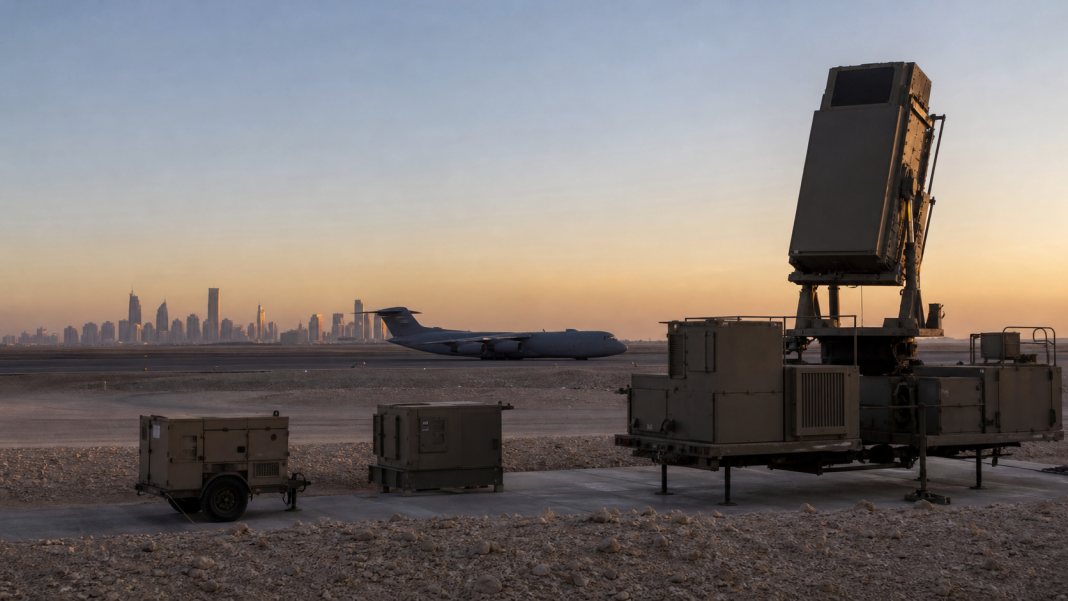
Kuwait’s separate $484 million request would sustain its fleet of C-17 military transport aircraft. The package includes aircraft components, modification equipment, spare and repair parts, ground-handling and communications equipment, software, training and logistics services. Boeing is the principal contractor.
The C-17 is a large transport aircraft used to move troops, equipment and humanitarian cargo. The U.S. government said maintaining Kuwait’s fleet would support strategic airlift and coalition operations.
Regional rearmament accelerates
The two proposed sales are part of a broader Gulf defense buildup since the war involving the United States, Israel and Iran began Feb. 28. Missile and drone attacks exposed gaps in air defenses and consumed large numbers of interceptors, according to an analysis by the International Institute for Strategic Studies.
A July tracker published by the Washington-based Gulf International Forum documented at least 20 major defense procurements and foreign deployments announced since March. The activity includes air-defense replenishment for Qatar, munitions and F-16 upgrades for the United Arab Emirates, new radar systems and expanded cooperation with Ukraine on counter-drone technology.
The Gulf buildup also extends beyond imports. EDGE Group, a defense company based in the United Arab Emirates, announced July 16 that it had agreed to acquire Brazilian aerospace engineering company AKAER. The proposed acquisition remains subject to regulatory approval and other closing conditions.
Fighting resumes after interim truce
The new U.S. approvals came as a June ceasefire framework unraveled and attacks resumed. The Associated Press and Reuters reported that U.S. forces struck targets in Iran while Tehran launched new attacks against U.S. facilities and Gulf countries hosting American bases.
Renewed fighting has again disrupted commercial shipping through the Strait of Hormuz. On July 16, the Associated Press reported that Brent crude, the international oil benchmark, was trading above $85 a barrel—more than 15% above its prewar level, though below the conflict’s earlier peak.
The defense approvals were announced before the latest round of infrastructure strikes. The rapidly changing security picture means equipment quantities, contract values and delivery schedules could change during negotiations and congressional review.
Sources
- Semafor: Gulf states are rearming rapidly as Iran war reignites, July 17, 2026
- U.S. Department of State notice republished by ASDNews: Saudi APKWS-II proposal, July 15, 2026
- U.S. government notice republished by Al Defaiya: Kuwait C-17 sustainment proposal, July 16, 2026
- Gulf International Forum: GCC defense procurements and foreign deployments, July 9, 2026
- International Institute for Strategic Studies: Challenge for the Gulf states—rearming after the war, May 2026
- EDGE Group: Proposed AKAER acquisition, July 16, 2026
- Associated Press: U.S. strikes and Gulf energy-market effects, July 16, 2026

