



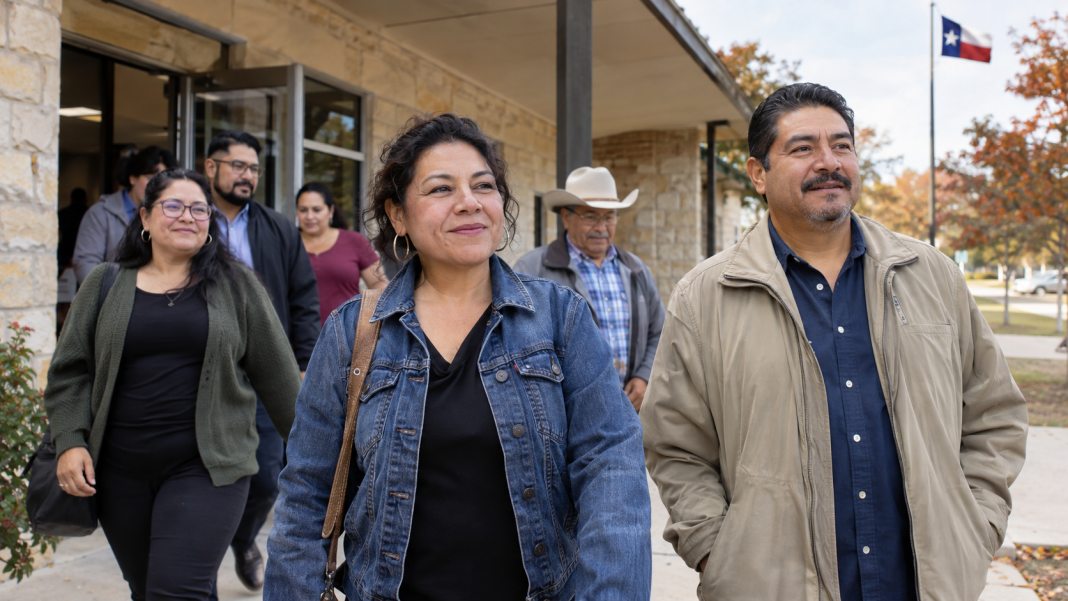
AUSTIN, Texas — Latino voters were central to the conversations following Texas’ Nov. 3 elections, as results across the state showed a sharply different political map from recent cycles and renewed attention on the issues shaping participation in Latino communities.
Texas’ electorate is not a single voting bloc. Latino voters vary by age, geography, income, religion and the issues they place at the top of the ballot. That diversity was visible in the results and in post-election accounts from voters around the state, where concerns about household costs, health care, public education, immigration enforcement and representation remained prominent.
In South Texas, the congressional race in the 15th District drew particular attention. Democrat Bobby Pulido defeated Republican U.S. Rep. Monica De La Cruz, returning the district to Democratic control after its recent shift toward the GOP. The outcome became one of several closely watched signs that campaigns seeking Latino support had to compete on local economic pressures as well as national political identities.
That local emphasis matters in communities along the border, where a campaign message can be judged through the immediate experience of a family budget, a school campus, a hospital visit, an immigration case or the availability of work. Candidates who treated voters as a uniform partisan constituency risked missing those distinctions, while candidates who organized around neighborhood concerns sought to build broader coalitions.
The statewide results also intensified discussion about turnout and persuasion. Democrats won major statewide contests, while election reporting showed that voting patterns changed across urban, suburban, border and rural communities. Analysts cautioned that one election does not settle the state’s long-term political direction, but said the results require both parties to reassess how they reach voters who have not consistently aligned with either party.
The Rio Grande Valley has been especially important to those debates in recent years. Its population growth, young electorate and economic ties to trade, health care, education and aerospace have made it a focus for campaigns looking for gains. The region has also shown that election outcomes can differ from one contest to another, even in the same year, depending on the candidates and issues on the ballot.
For Brownsville and the Rio Grande Valley, the election underscored the local stakes of statewide office. Decisions made in Austin affect public schools, health care access, water and transportation infrastructure, border policy and the regulatory environment for the region’s growing industries. The results also placed South Texas voters at the center of a broader debate over what messages and policy priorities can earn durable support.
Election outcomes remain subject to the state’s canvassing and certification process. The next test for both parties will be whether they maintain contact with communities after the campaign season and turn post-election promises into policy and constituent service.
Sources: KERA via Google News; Texas Tribune election reporting.

