



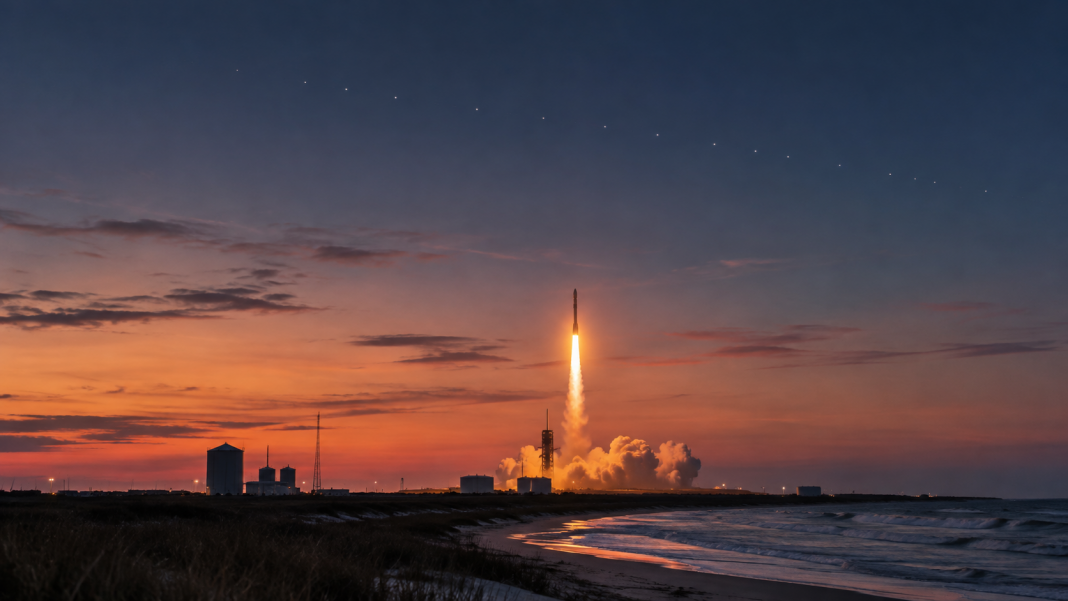
BROWNSVILLE, Texas – The Federal Communications Commission has authorized SpaceX to deploy up to 1 million satellites intended to support artificial intelligence computing in orbit, a decision that could have implications for the company’s growing launch operations at Starbase and for the wider commercial-space industry.
The authorization covers SpaceX’s proposed Starmind constellation, which the company has described as a network of satellites designed to use solar power for space-based data processing. The FCC action allows the proposal to move forward in the federal licensing process, but it does not by itself establish a launch schedule, confirm that all satellites will be built or deployed, or settle concerns raised by competing companies and astronomy groups.
FCC Chairman Brendan Carr announced the decision Wednesday, saying the Starmind project and other constellations could use solar energy to support U.S. leadership in artificial intelligence. Elon Musk said the project would be an asset to the United States and the world.
SpaceX’s proposal drew substantial public comment and formal opposition from Kuiper Systems, the Amazon-backed satellite company; Viasat; and the American Astronomical Society, according to the FCC authorization. Amazon had argued earlier this year that SpaceX had not provided enough detail to demonstrate how it would build and operate a constellation of that scale.
The scale of the proposal would far exceed the satellite constellations now operating in low Earth orbit. SpaceX already operates Starlink, its broadband satellite network, while Amazon, Blue Origin and other companies are pursuing their own satellite and space-based computing initiatives.
Critics of large satellite constellations have raised concerns about orbital congestion, collision risks and the impact of bright objects on optical astronomy. The FCC said it dismissed comments involving subjects outside the commission’s authority, including some environmental concerns and issues involving the effect on optical astronomy.
The order comes as SpaceX continues to expand its presence near Brownsville through Starbase, where the company develops and tests its Starship system. The FCC authorization concerns an orbital communications and computing proposal, not a specific Boca Chica launch approval. Any future launches associated with the constellation would remain subject to separate vehicle, launch-site, safety and other regulatory requirements.
For the Rio Grande Valley, the decision adds another national-scale SpaceX development to the company’s growing portfolio. Its practical local effect will depend on the company’s eventual construction, launch and deployment plans, which were not announced in the authorization.

