




By Maria Gonzalez
RIO GRANDE VALLEY, TEXAS – OCT. 17, 2025 –Ten UTRGV students gained practical research experience this summer, during internships at NASA research centers and UT Austin’s Jackson School of Geosciences.
Their work included projects in Mars organic chemistry modeling, space crew radiation analysis, and other studies supporting NASA’s ongoing science and engineering missions.
The students participated in 10-week internships through the NASA-funded RAISE project – Remote-sensing and Analytics for Integrating Science Education with NASA’s Science Mission Directorate (SMD) to Strengthen Student Research Capacity at MSI.
The initiative, funded under NASA’s Minority University Research and Education Project (MUREP), was launched in 2023 through a $1.2 million award to UTRGV. The project strengthens student research capacity in earth, environmental and planetary sciences, and prepares participants for fields aligned with NASA missions.
Through RAISE, students gain hands-on experience that contributes to active NASA science and engineering missions.
The 2025 cohort included:
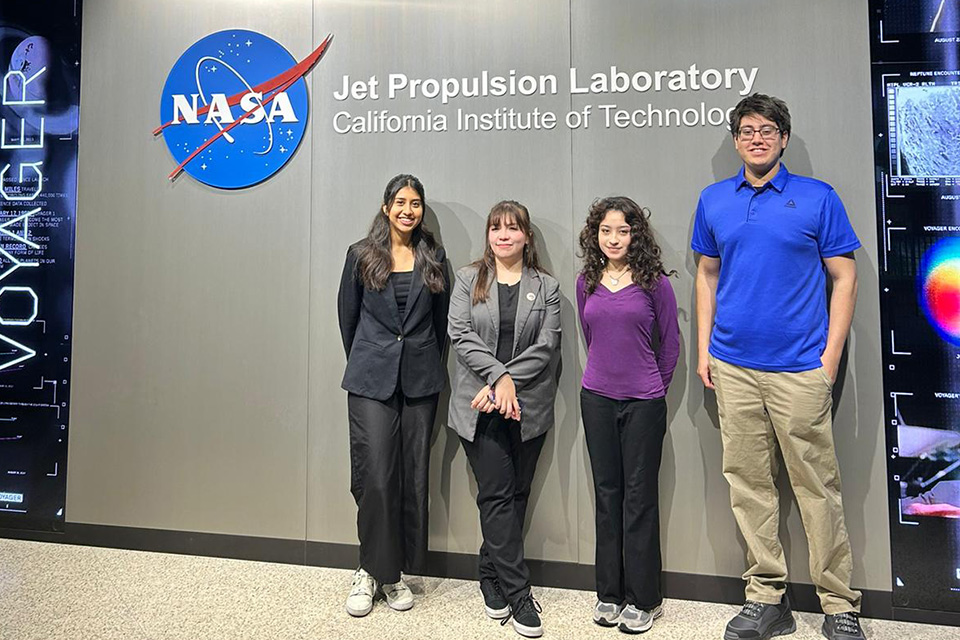
- Jet Propulsion Laboratory: Kiara Garduño Pérez, a master’s student in biochemistry and molecular biology from Lexington, South Carolina; Jazmín Álvarez, a mechanical engineering major from Brownsville, Texas; Odalis Gutiérrez, an environmental science major from Los Fresnos, Texas; and Xaric Ríos, a computer science major from McAllen, Texas.
- Johnson Space Center: Marcos Peña, a mechanical engineering major from McAllen, Texas; Alejandra Medina, a mechanical engineering major from Brownsville, Texas; and Lauren Sánchez, a biology major from Mission, Texas.
- UT Austin Jackson School of Geosciences: Sebastián López, an environmental science major from Roma, Texas; Hannah Rodríguez, an environmental science major from Mission, Texas; and Anthony Mendoza, an environmental science major from San Juan, Texas.
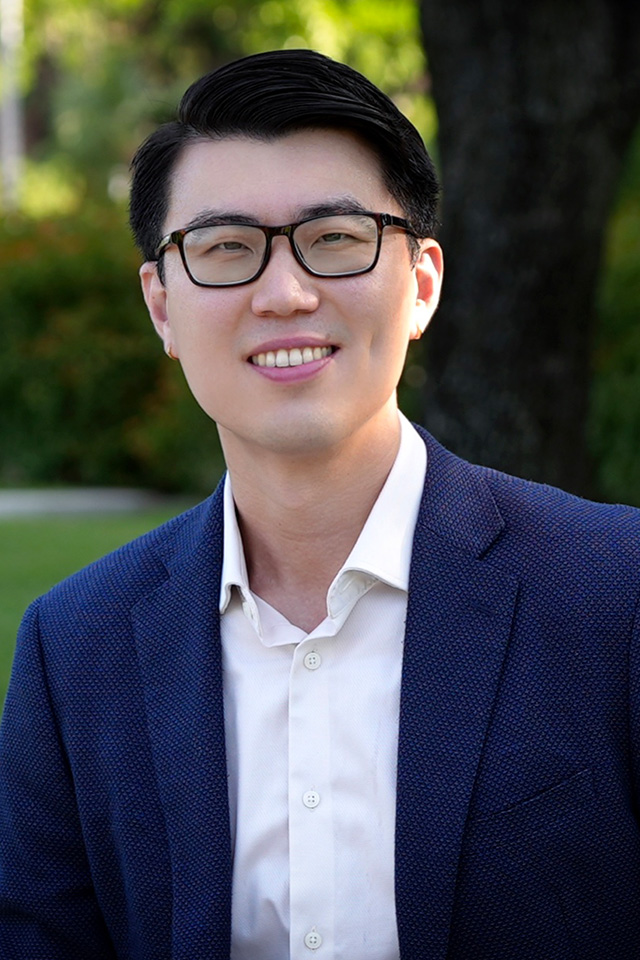
Dr. Tian Y. Dong, assistant professor in the School of Earth, Environmental, and Marine Sciences (SEEMS) and principal investigator (PI) on the RAISE project, leads the initiative along with co-principal investigators (co-PIs) Dr. Chu-Lin Cheng and Dr. Engil Pereira.
The program gave the 10 UTRGV students an opportunity to work alongside leading scientists.
“These internships allowed students to experience the latest science and engineering work at NASA,” Dong said. “Our students also had the opportunity to be mentored by NASA scientists, observe their daily activities, and learn about the scientific questions they are exploring. More importantly, our students made meaningful contributions to ongoing projects at NASA during their internships.”
Dong said the summer marked an important milestone for the project.
“As an educator, the most rewarding part is hearing positive feedback from our students,” he said. “We have experienced overwhelming success in all aspects of the grant, from revised classes to seminars and internships. We received thoughtful notes from students and observed significant growth in their confidence and research skills.”
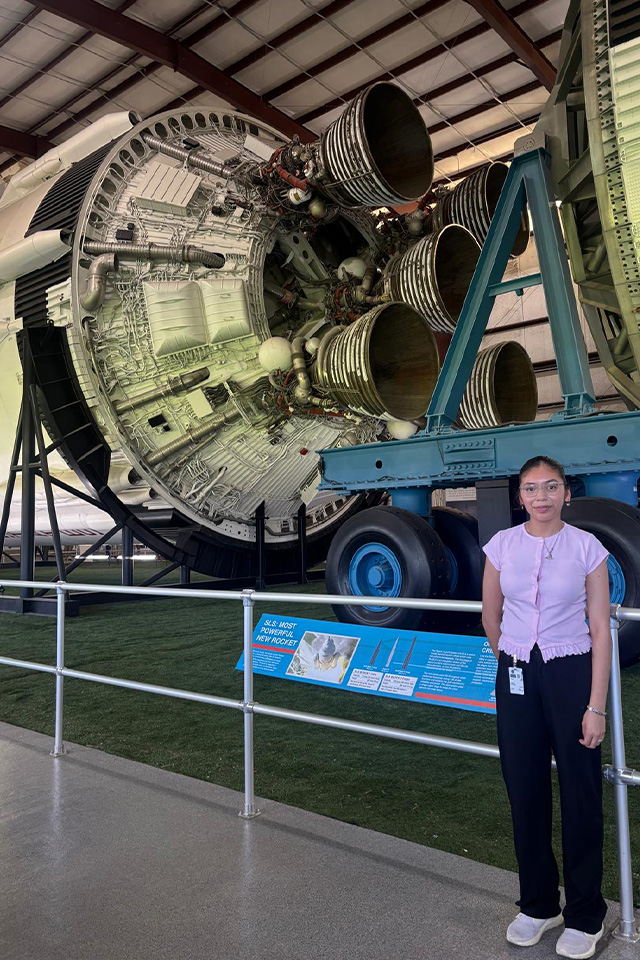
Lauren Sánchez, a UTRGV senior biology major, at NASA’s Johnson Space Center in Houston during her 2025 summer internship through the RAISE program. (Courtesy Photo) Lauren Sánchez said her internship at Johnson Space Center gave her perspective on her future path.
“My experience at Johnson Space Center challenged me,” Sánchez said. “I worked with the Space Radiation Analysis Group through research on how radiation affects the human body. The internship motivated me to continue learning in STEM, and I am grateful to Dr. Dong and the RAISE program for such a meaningful summer experience.”
Xaric Ríos said his time at the Jet Propulsion Laboratory expanded his technical skills and strengthened his interest in graduate research.
“Interning at the Jet Propulsion Laboratory gave me experience applying computer science to research in river hydrology, biochemistry and geophysics,” Ríos said. “Working directly with NASA researchers showed me how computation drives scientific discovery and deepened my motivation to pursue advanced studies.”
Ríos also thanked Dong and the RAISE program for the chance to conduct hands-on research with NASA professionals.
Dong said the results show how structured preparation and mentorship can translate into student success.
“The RAISE project is unique in that we spend an entire academic year preparing our students for these internships through revised courses and seminars,” he said. “We make careful efforts to pair our students with projects that best match their expertise.”
Dr. Thomas B. Spencer, senior associate vice president for Research Operations at UTRGV and a NASA Solar System Ambassador, said the results demonstrate the university’s role in preparing students for advanced opportunities in science and engineering.
“Partnerships like these give our students access to the highest level of research and mentorship at prestigious institutions like NASA and UT Austin,” Spencer said. “It not only strengthens their career readiness, but also advances UTRGV’s mission to build a more diverse and capable STEM workforce.”
The RAISE program will continue to provide students with research training during the academic year, with future cohorts expected to follow this summer’s group.

