



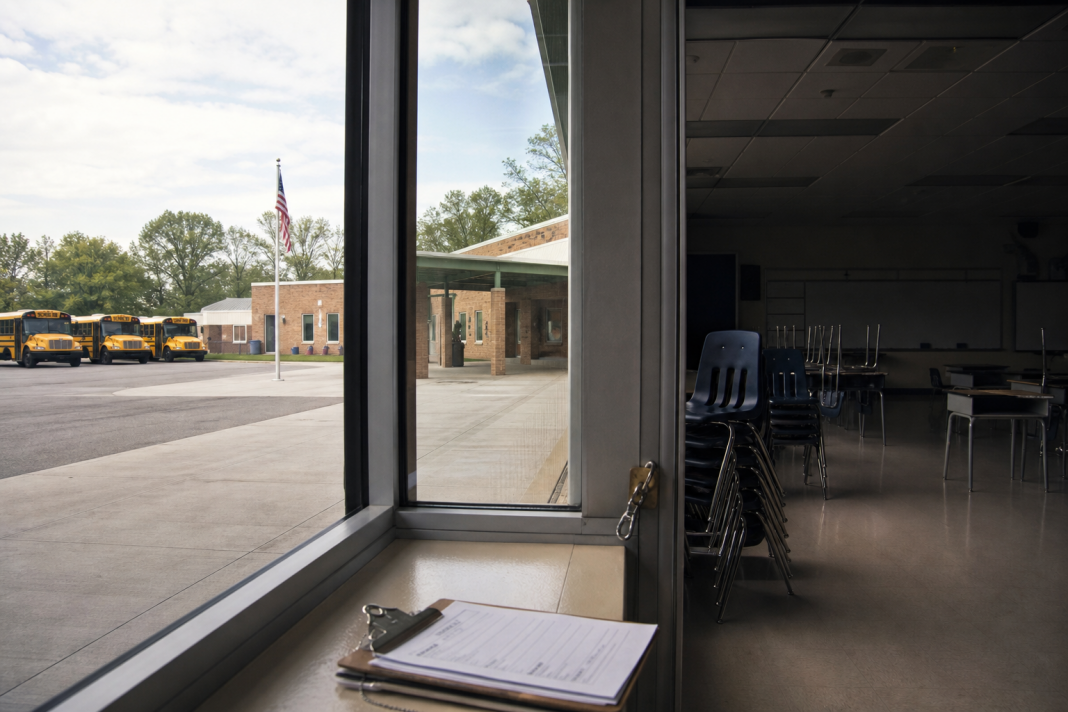
Public school closures are accelerating across the United States as districts confront fewer students, expiring pandemic aid and the cost of maintaining underused buildings.
A Washington Post analysis reported that closures increased 35% nationwide over the past four years. The change is being felt in large cities, suburbs and rural communities, where a shrinking school-age population can turn a building that once seemed essential into a major budget burden.
The enrollment decline has several causes. Birth rates have fallen, families have moved, housing costs have changed where children live, and more students remain outside traditional public schools than before the pandemic. Temporary federal COVID-19 relief also allowed some districts to delay difficult decisions; much of that money is now gone.
Research from the Brookings Institution found that the share of children outside public schools averaged 9.7% before COVID-19, rose sharply during the pandemic and remained at 12.6% in 2023-24. Using federal school data and population projections, researchers estimated that demographic change alone could reduce public school enrollment by about 2.2 million students by 2050 even if families eventually return to pre-pandemic schooling patterns.
Texas is no longer insulated from the trend
Texas public schools enrolled roughly 76,000 fewer students during the 2025-26 academic year, according to an analysis by Texas 2036 reported by The Texas Tribune. It was the state’s first non-pandemic enrollment decline in nearly four decades. The group projected that public school enrollment could fall by about 100,000 students by the end of the decade.
Statewide growth does not automatically produce more students in every district. New development may be concentrated far from older campuses, while charter schools, private schools and home schooling change the share of children attending district-run schools. Those patterns can leave some buildings crowded and others well below capacity at the same time.
Closing or consolidating schools can reduce building, administrative and maintenance expenses, allowing districts to direct more money toward instruction. But the savings are not automatic. Districts may face transportation costs, building-security expenses and one-time renovation bills at receiving campuses.
Families can also experience longer commutes, larger classes and the loss of a neighborhood institution. Research on closures has found that outcomes depend heavily on whether students move to stronger schools and whether districts provide transportation, staffing and academic support.
The National Center for Education Statistics cautions that a school listed as closed does not necessarily mean its building has stopped serving an educational purpose. Some campuses reopen under a new name, merge with another program or are repurposed.
For Rio Grande Valley families, the national trend is a reason to watch local enrollment forecasts and school-board facility plans closely. Closure decisions usually develop over months and should include clear data on building use, transportation, academic programs and the effect on students with disabilities and other specialized needs.
Sources: The Washington Post report via MSN, the National Center for Education Statistics, Brookings Institution research and The Texas Tribune.

