



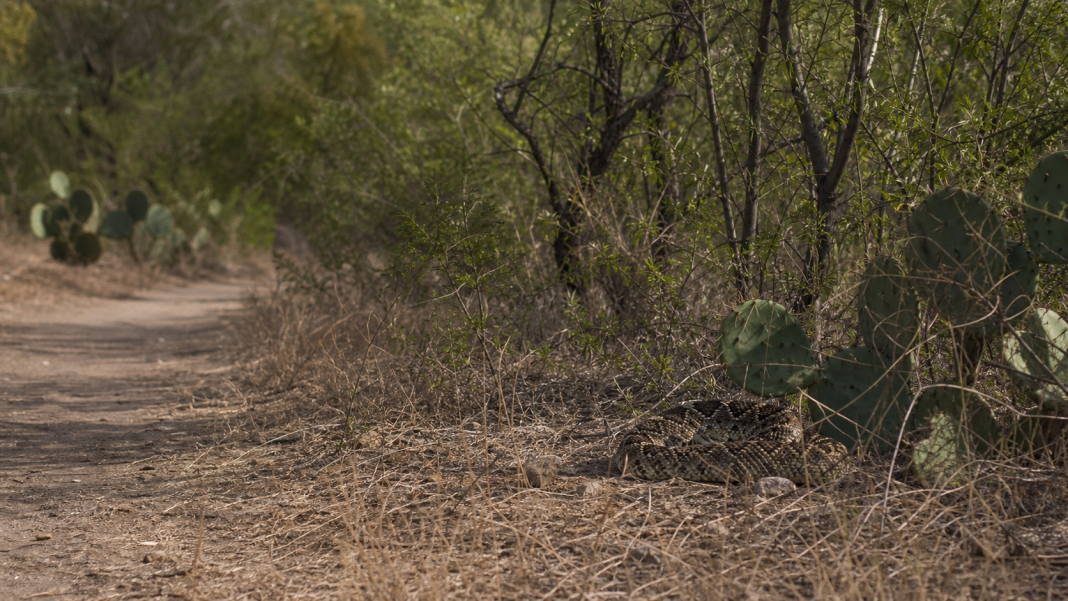
Texas has more than 100 snake species and subspecies, but only a minority are venomous. The potentially dangerous varieties fall into four broad groups: rattlesnakes, copperheads, cottonmouths and coral snakes.
The western diamondback is the state’s most widespread venomous snake and is found across most of Texas. The desert massasauga occurs in the Lower Rio Grande Valley as well as parts of West Texas and the Panhandle. Cottonmouths are concentrated in the eastern half of the state and along wet habitats, while coral snakes occur in the southeastern half.
Color and head-shape rules are not reliable enough to justify a close look. Lighting, age and natural variation can make harmless species resemble venomous ones. If a snake is encountered, stop, give it space and allow it a route away. Keep children and pets back, and never try to catch, move or kill it.
A person who is bitten should call 911 and the Poison Help line at 1-800-222-1222. Keep the person calm and still, remove rings or tight items near the bite and wait for professional instructions. Do not cut the wound, apply ice, use a tourniquet or attempt to suck out venom.
A photograph taken from a safe distance may help identification, but no one should approach a snake to get one. Most snakes play an important role controlling rodents and other pests.
Species and range information comes from Texas Parks and Wildlife. First-aid guidance is available from the Texas Poison Center Network. The original overview was published by USA Today.

