



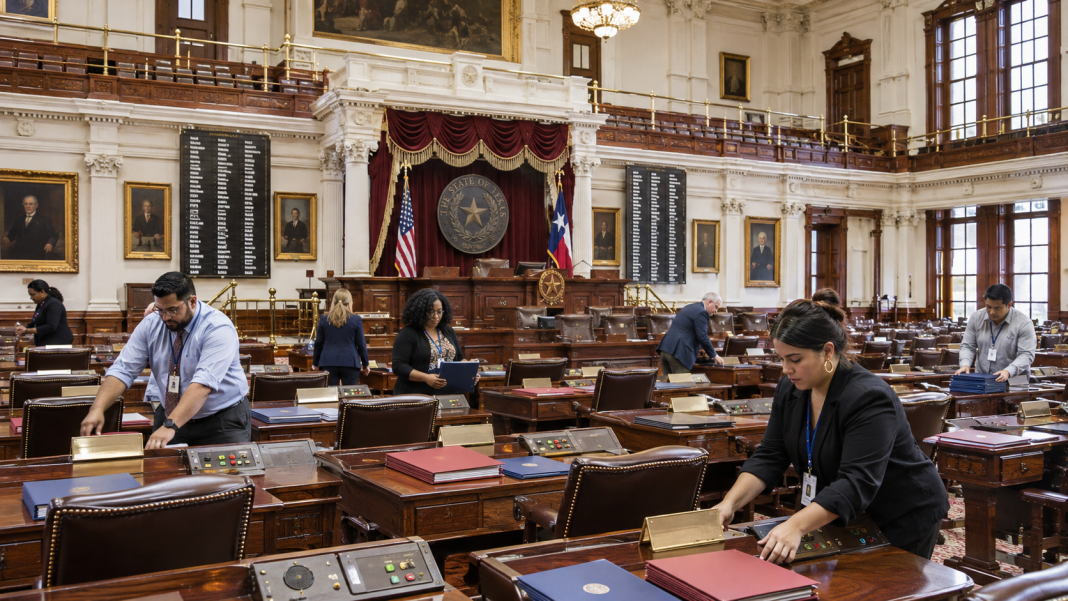
AUSTIN, Texas – Democrats won control of the Texas House for the first time in more than two decades, breaking the Republican governing trifecta and setting up a divided state government when lawmakers return to Austin in January.
Democrats entered Election Day holding 62 of the chamber’s 150 seats and needed a net gain of 14 for a majority. By Wednesday afternoon, The Associated Press had called 11 Republican-held districts for Democratic candidates, while Republican incumbents had conceded in three more.
Democrats also led in several additional districts after Election Day ballots were counted. If those margins survive provisional ballots, eligible late-arriving mail ballots and any recounts, the party could begin the session with about 83 seats to 67 for Republicans, The Texas Tribune reported.
The results remain subject to county canvasses and state certification. A handful of close races could change the final margin without reversing the overall shift in control.
The change ends a House majority Republicans had held since 2003. It also gives Gov.-elect Gina Hinojosa a chamber controlled by her party, although Republicans retained their majority in the Texas Senate.
South Texas contributed to the statewide change. Republican Rep. Janie Lopez of San Benito lost her battleground district, and Rep. Denise Villalobos of Corpus Christi was defeated. Democrat Kristian Carranza also captured a San Antonio-area seat that Republican John Lujan vacated to run for Congress.
Democratic gains extended through Harris, Tarrant, Dallas and Denton counties. Longtime Garland Republican Angie Chen Button was defeated after surviving several earlier Democratic challenges, and Republican Ben Bumgarner conceded his Denton County race.
Republicans held several targeted districts. Mark Dorazio of San Antonio, Mano DeAyala of Houston and Morgan Meyer of University Park won reelection, preventing the Democratic wave from reaching every competitive seat.
The election produced divided control at the Capitol. Republicans were expected to maintain a 19-12 Senate majority. Democrat Vikki Goodwin defeated Lt. Gov. Dan Patrick and will become the Senate’s presiding officer, but Republican senators can change chamber rules and could limit the lieutenant governor’s practical authority.
The House majority will select a speaker when the session begins. Houston Rep. Senfronia Thompson, the longest-serving woman and Black lawmaker in Texas history, announced her candidacy with support from several Democrats. El Paso Rep. Joe Moody, a former speaker pro tempore who has worked closely with Republican leaders, was also discussed as a contender.
House Democrats have identified Medicaid expansion, school-voucher repeal and changes to immigration-related state laws as possible priorities. Passing those measures will require agreement from the Republican Senate and the governor, and some proposals may be altered or blocked during negotiations.
Hinojosa can shape the early session by declaring emergency items that lawmakers may consider during the first 60 days. The governor also has veto authority and can call special sessions, but cannot enact legislation without both chambers.
Republicans and their allies spent millions of dollars defending more than 30 seats and generally outspent Democratic challengers in the most competitive races. The broad losses prompted party strategists to begin assessing how affordability, education, immigration and dissatisfaction with national politics affected voters.
Democrats will also face the challenge of protecting their new districts in 2028, when turnout and the political environment may differ sharply from the midterm wave that carried them into power.
Source: The Texas Tribune, first published Nov. 3, 2026, and updated Nov. 4. Additional verification: Associated Press race calls and unofficial election returns.

