



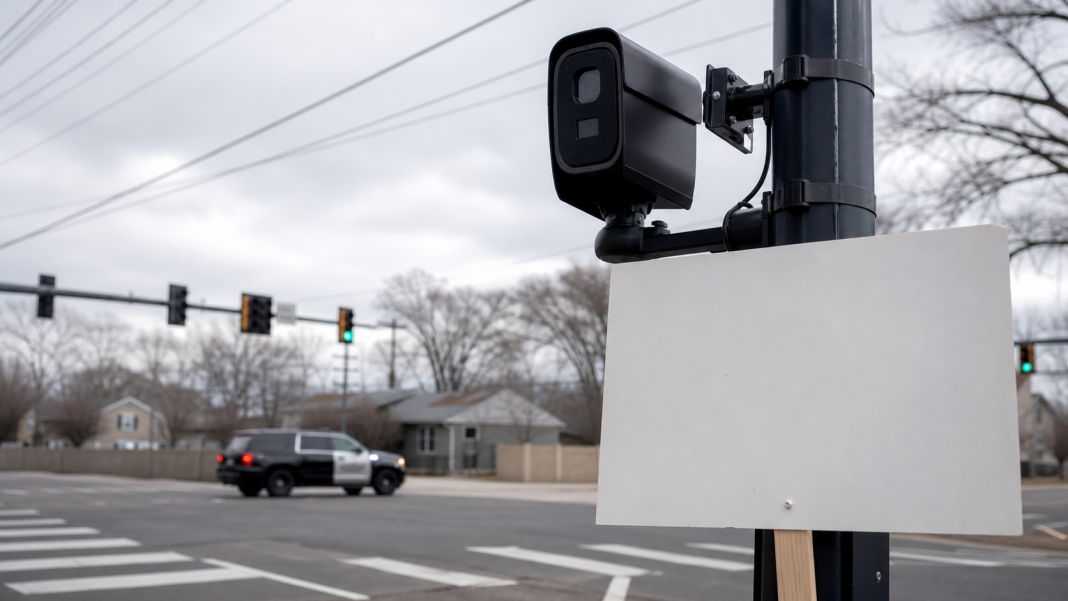
Automated license-plate-reader cameras used by police are being covered, damaged and removed across the country as privacy concerns fuel a growing backlash against the expanding surveillance network.
An NPR review of local news reports found that cameras made by Flock Safety had been vandalized in at least 36 states. Incidents ranged from people placing signs or bags in front of lenses to cutting down poles or otherwise damaging equipment. Police departments have opened criminal investigations in several communities.
Flock cameras photograph the license plate and other visible characteristics of passing vehicles and record the time and location. Police can search the data to locate a vehicle connected to a missing person, stolen car or criminal investigation, and agencies may share access across jurisdictional lines.
Law-enforcement officials say the systems can quickly narrow searches that once required officers to review hours of video or contact multiple departments. Agencies have credited license-plate readers with helping find kidnapping victims, recover stolen vehicles and identify suspects in violent crimes.
Critics say a large, interconnected network can also reconstruct people’s movements without a warrant, including visits to medical offices, religious services, political events or private homes. The concerns have drawn opposition from civil-liberties groups and political activists on both the left and right.
Documented cases of officers using license-plate databases for personal purposes have intensified scrutiny. Other disputes involve whether local camera data can be accessed by immigration authorities or outside police departments investigating conduct that is legal in the community where the information was collected.
Flock announced additional safeguards Aug. 13. The company said law-enforcement customers will be required to use an audit tool designed to flag unusual searches, and officers will generally have to connect searches to a case number. Emergency overrides would be marked for review.
The company also said it will shorten the standard retention period for license-plate data from 30 days to seven. Agencies may preserve evidence tied to a case, and local customers will receive more control over which offenses allow outside departments to search their data.
Flock says customers own their data, searches are logged and its cameras do not use facial recognition. The American Civil Liberties Union called the shorter retention period a step in the right direction but said the changes did not resolve broader concerns about mass tracking and local oversight.
The debate has reached Texas. NPR photographed a vandalized camera in Houston in July, and officials in Bexar County have faced questions about privacy, permits and damaged equipment. Residents can raise concerns through city councils, county commissioners, police oversight processes and public-records requests.
Damaging or obstructing public or privately owned equipment can lead to criminal charges and repair costs. Civil-liberties advocates generally urge residents to use lawful methods such as public meetings, litigation, contract reviews and legislation when challenging surveillance programs.
The spread of vandalism illustrates the depth of public distrust, but it does not settle the policy question. Communities must decide what crimes justify a search, how long data should be retained, which agencies may obtain access and how misuse will be detected and punished.
Source: NPR, published Aug. 21, 2026. Additional verification: Flock Safety privacy policies and Associated Press reporting on the company’s Aug. 13 safeguards.

