



LAS VEGAS – A tracking device concealed in a rare book led reporters to an Amazon facility where workers were reportedly dismantling and scanning physical books, adding new detail to questions about how technology companies acquire hard-to-find material for artificial intelligence systems.
The investigation began when 404 Media worked with a bookseller who had received bulk orders for rare and out-of-print titles. An Apple AirTag hidden in one shipment traveled to a Las Vegas facility identified in the report as an Amazon artificial intelligence training operation. Workers there were described as separating pages from bindings and scanning them with specialized equipment.
Amazon told Ars Technica that it purchases books through commercial channels to help develop and improve products and services. The company did not specifically confirm that the books followed by the reporters were being converted into AI training data or explain how scanned material would be used. The investigation therefore provides evidence about the shipment’s destination and the reported scanning process, but not a full public accounting of the resulting data.
Generative AI developers need large collections of text to train and evaluate language models. Much of the easily available material on the open web has already been collected, increasing the potential value of works that are older, out of print, untranslated or absent from common digital archives. The books involved may have limited resale value while still carrying historical, scholarly or sentimental importance.
According to the report, workers scanned ISBNs and barcodes before processing pages, a practice consistent with tracking which editions had entered the collection. Posts attributed to workers also suggested the facility had at times run short of books and continued to seek more material. Those details were reported by 404 Media and Ars Technica and have not been independently documented in a public statement from Amazon.
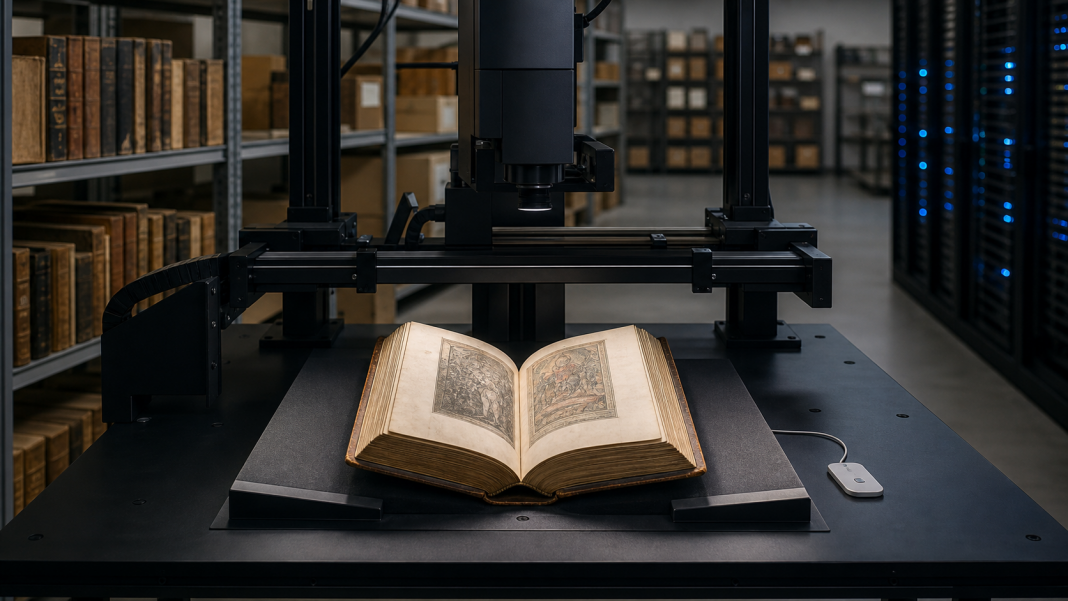
Destructive scanning is not the only way to digitize a book. Libraries and archives commonly use overhead systems designed to limit stress on bindings, particularly when a copy is scarce. Booksellers and preservation experts worry that destroying a rare volume can eliminate the only surviving copy of an edition even if its market price is modest.
The findings also add to unresolved copyright and transparency debates surrounding AI. Buying a physical book transfers ownership of that copy, but it does not automatically settle every question about copying the text, building a dataset from it or using that dataset commercially. Courts and policymakers continue to consider how existing copyright rules apply to model training.
Sources: Ars Technica and 404 Media. Original report published Aug. 17, 2026.

