



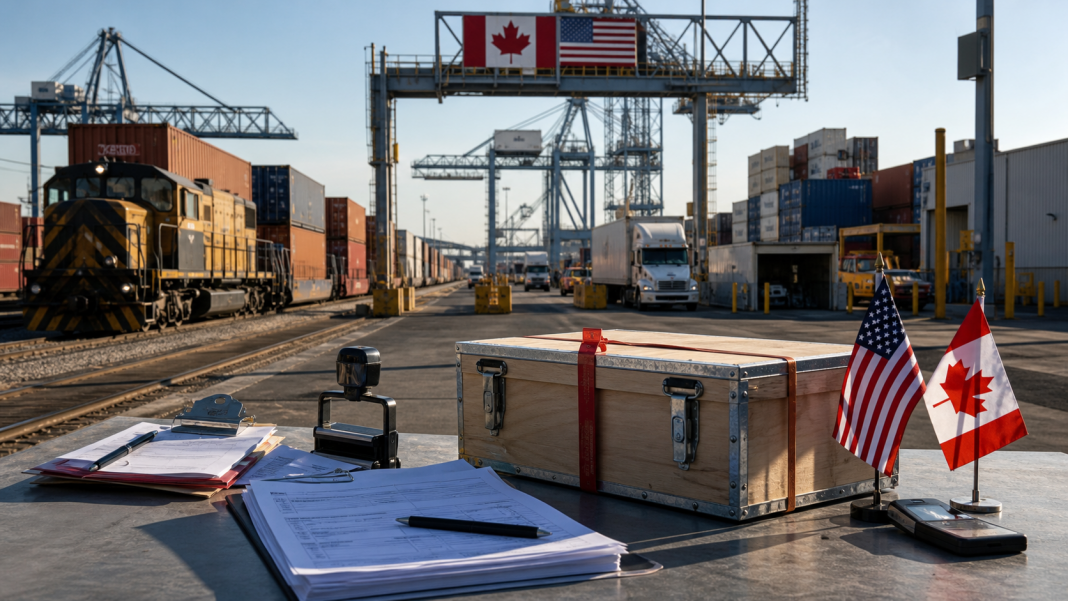
The United States will impose an additional 50% tariff on nearly $20 billion in Canadian goods beginning Aug. 19, opening a new front in the trade dispute between the neighboring countries.
President Donald Trump signed three proclamations Monday under Section 338 of the Tariff Act of 1930. The measures target groups of Canadian imports tied to disputes over automobiles, alcoholic beverages and dairy products, according to the White House and the Office of the U.S. Trade Representative.
The covered products extend beyond those three sectors. A White House fact sheet listed Canadian wine, hockey sticks, cement, dairy goods, swimming pools, furniture, fishing rods, seeds, clothing and wigs among the affected merchandise.
The additional duties are scheduled to begin at 12:01 a.m. Eastern time Aug. 19. They apply to listed products even when the goods qualify for preferential treatment under the United States-Mexico-Canada Agreement.
Some major Canadian exports are exempt
The proclamations exclude energy, potash, fish, critical minerals and products already subject to national-security tariffs under Section 232. Importers will need to check the specific tariff classifications in the proclamations because the 50% rate does not apply to every product Canada sends to the United States.
Section 338 permits the president to impose duties of up to 50% when another country is found to discriminate against U.S. commerce. The administration said Canada treated American vehicle, alcohol and dairy exporters less favorably than some competitors.
U.S. Trade Representative Jamieson Greer said the actions were intended to answer Canadian trade barriers and retaliation. The White House said Canadian imports of U.S. motor vehicles fell about 22% from April 2025 through March 2026 compared with the previous 12-month period. It also said Canadian imports of U.S. alcoholic beverages declined 81% over the past year.
Those figures and the characterization of Canada’s policies are the administration’s stated justification for the tariffs. Canada rejects that account.
Canada says the action violates the regional trade agreement
Canadian Prime Minister Mark Carney called the new duties another unilateral U.S. trade measure and said previous American tariffs violated the USMCA, known in Canada as CUSMA. He said Canada’s countermeasures matched earlier U.S. actions and that his government was prepared to intensify negotiations.
Canada has maintained countertariffs in sectors including steel, aluminum and automobiles while removing many other retaliatory duties in 2025. Carney said the wider dispute has increased costs for families and promised support for Canadian workers and businesses.
A tariff is collected from the U.S. importer when covered goods enter the country. It is not a bill sent directly to the Canadian government or exporter. The final economic effect depends on contracts, exchange rates, available substitutes and how much of the added cost importers pass to wholesalers, retailers and consumers.
Businesses that rely on Canadian inputs may try to change suppliers, renegotiate prices or reduce profit margins. Consumers could see higher prices on some covered goods after existing inventories are depleted, although the effect will differ by product and market.
For Texas, the immediate exposure may be less visible than it is in northern border states, but national supply chains connect ports, construction companies, retailers and manufacturers across the country. Cement, furniture, packaged foods and specialized industrial materials can move through multiple states before reaching South Texas buyers.
The 30-day period before implementation leaves time for negotiations, customs guidance and possible changes. Importers should rely on the final tariff schedules and U.S. Customs and Border Protection instructions rather than assuming every Canadian product will face the same rate.
Sources: Reuters, the White House fact sheet, the Office of the U.S. Trade Representative and the Prime Minister of Canada.

