


SALT LAKE CITY – Utah has increased penalties for retailers that repeatedly charge customers more at checkout than the prices displayed on store shelves, a consumer-protection change prompted by a pattern of failed price-accuracy inspections.
The law took effect May 6 and allows a $10,000 civil penalty for each failed inspection beginning with a retailer’s sixth violation. The previous maximum was generally $5,000 per failed inspection. The higher penalties apply not only to dollar stores but also to supermarkets, big-box stores and other retailers covered by the state’s weights-and-measures program.
The Guardian reported April 16 that Utah lawmakers pursued the change after its national investigation found repeated pricing problems at Dollar General and Family Dollar stores. The investigation reviewed government inspection records from 2022 through 2025 and found more than 4,300 failed inspections at Dollar General stores in 23 states and more than 2,100 failures at Family Dollar locations in 20 states.
A Family Dollar store in Provo became a central example in the Utah debate. State records showed it failed 28 inspections during the four-year period. During one inspection, 48% of the tested items rang up above the shelf price. Products affected included basic household and grocery goods such as diapers, soap, frozen pizza and canned food.
Rep. Candice Pierucci, the Republican sponsor, cited the Provo results while presenting the bill. Lawmakers said checkout errors can be especially difficult for shoppers managing children, large purchases or tight budgets because they may not remember every shelf price by the time they reach the register.
Miland Kofford, who leads Utah’s weights-and-measures program, told the Guardian that state officials saw a stronger corporate response when a missed payment caused one Provo fine to double to $10,000. He said the higher amount drew attention from company leadership and was followed by a management change at the store.
The measure passed with bipartisan support. It is designed to focus the strongest penalty on chronic violations rather than isolated mistakes, while preserving the state’s authority to inspect price accuracy and document whether shelf and register prices match.
Family Dollar previously said it takes customer trust seriously and is committed to accurate pricing. Dollar General said it is disappointed whenever a store fails to deliver accurate prices. Neither company’s statement addressed the Utah law in detail.
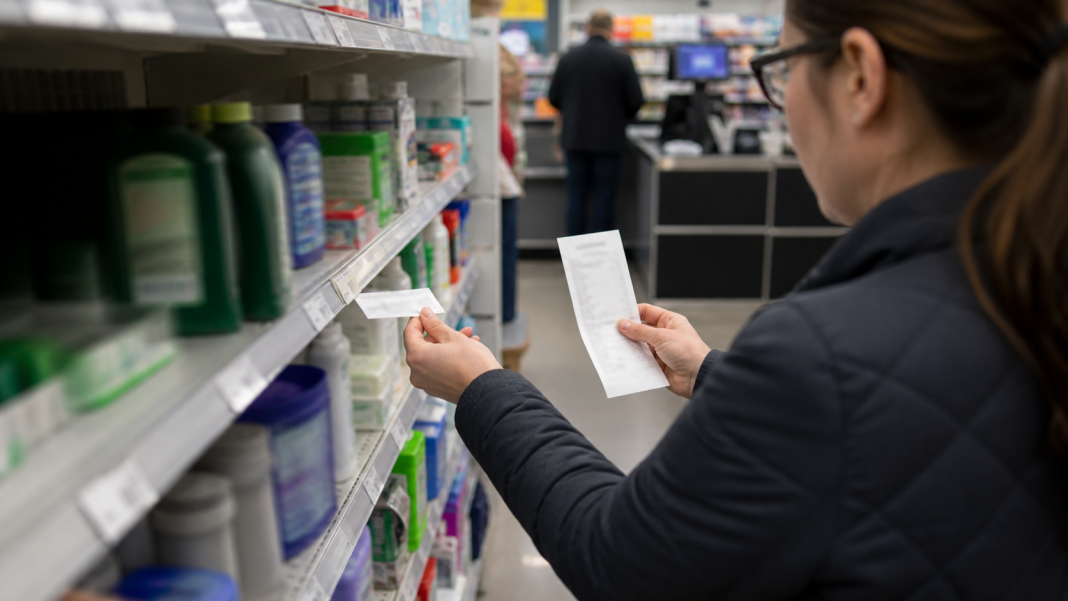
The issue extends beyond Utah because national retailers use centralized pricing systems while individual stores must keep thousands of shelf labels current. Consumers can protect themselves by photographing shelf prices, reviewing receipts before leaving and reporting discrepancies to store management or state consumer-protection officials. Texas shoppers can report suspected deceptive pricing to the Texas Department of Agriculture or the state attorney general’s consumer-protection office.
Source: The Guardian, published April 16, 2026. Additional verification: Utah price-accuracy inspection findings and legislative information reported by the Guardian.

