



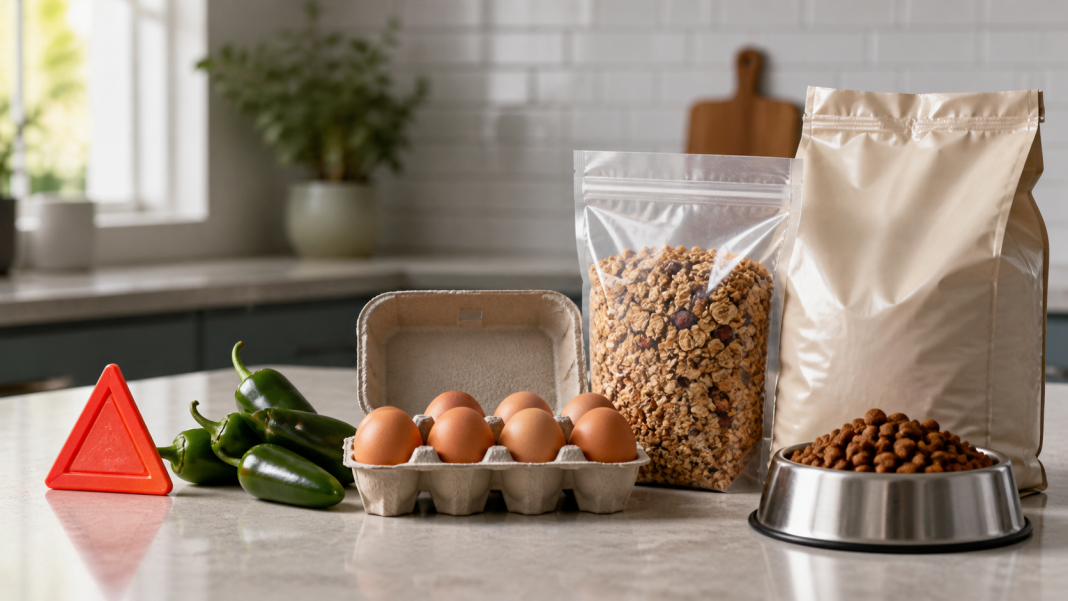
WASHINGTON – A series of Salmonella outbreaks and recalls involving jalapeno peppers, eggs, granola and raw dog food is prompting federal health officials to remind consumers that the bacterium can reach kitchens through many different products.
The largest current outbreak is linked to fresh jalapenos grown in Sinaloa, Mexico, and distributed in the United States by Coast Citrus Distributors. In an Aug. 19 update cited by Wired, the Centers for Disease Control and Prevention reported 431 illnesses in 32 states and 57 hospitalizations.
The affected peppers led to recalls of fresh jalapenos and prepared foods containing them, including salsa, guacamole, dips and salad dressing. Products were distributed through multiple national and regional retailers. Chipotle and Qdoba also removed peppers associated with the supplier and replaced them with products from other sources.
A separate Salmonella Enteritidis outbreak linked in part to eggs had sickened 98 people in 17 states and hospitalized 26. Midwest Poultry Services recalled about 19 million eggs produced or distributed from Texas farms. Investigators said the recalled eggs did not explain every illness, so they continued examining other possible sources.
Other recalls included Lacnola Lactation Granola made with organic moringa powder that could be contaminated and one lot of Oma’s Pride Woof Complete Canine Chicken Recipe. The Food and Drug Administration said a pet-food sample tested positive for Salmonella and three illnesses in dogs had been reported.
People infected with Salmonella commonly develop diarrhea, fever and abdominal cramps. Symptoms generally begin from six hours to six days after exposure and usually last several days. Young children, older adults and people with weakened immune systems face a greater risk of severe infection.
Pets can become sick and can also spread bacteria to people through their saliva, stool, bowls or contaminated food surfaces. Owners should wash their hands after handling recalled pet food and avoid allowing pets to lick faces or open wounds.
Salmonella can enter eggs before a shell forms when laying hens carry the bacterium. Produce may be contaminated by irrigation water, soil, equipment, animals or handling after harvest. Warm temperatures allow bacteria to multiply rapidly when perishable foods remain unrefrigerated.
Consumers should check recall notices by brand, package size, lot code and date rather than assuming every product in a category is unsafe. Recalled food should be discarded or returned, and surfaces it touched should be cleaned and sanitized.
Routine precautions remain effective: Wash hands, keep raw eggs and meat separate from ready-to-eat foods, refrigerate perishables within two hours and cook food to safe internal temperatures. Washing produce can reduce surface dirt but cannot guarantee removal of bacteria that have entered damaged tissue.
Source: Wired, published Aug. 20, 2026. Additional verification: CDC and FDA outbreak and recall notices.

