



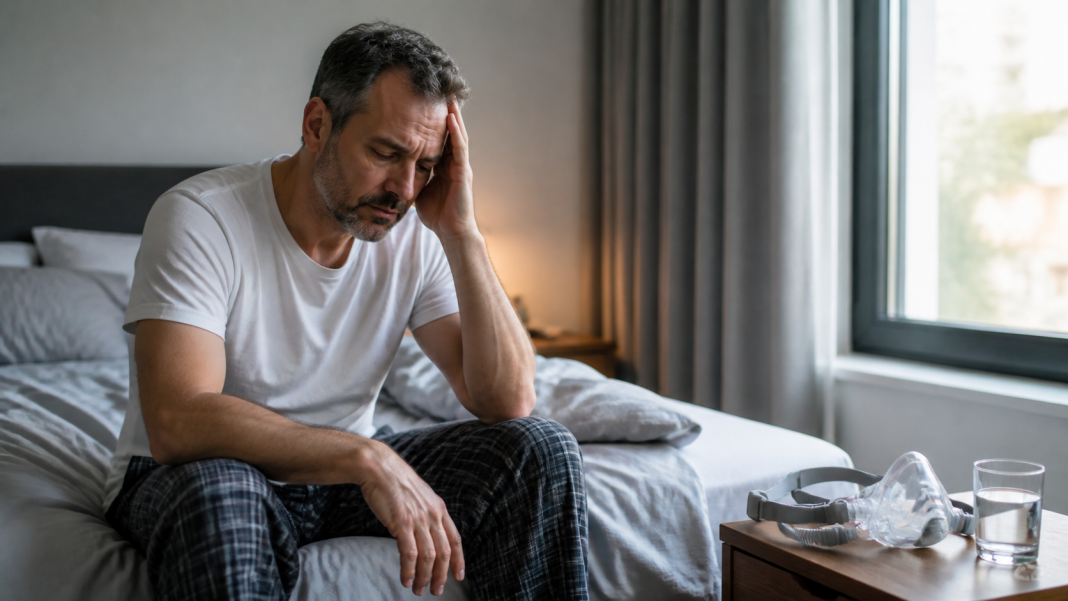
Waking with a headache can be a clue that sleep is being disrupted, and obstructive sleep apnea is one condition doctors consider when the pain appears repeatedly with loud snoring, gasping or daytime exhaustion.
Sleep apnea causes breathing to stop or become shallow many times during the night. Those interruptions can lower oxygen, raise carbon dioxide and repeatedly wake the brain, even when a person does not remember the awakenings. Morning headaches associated with sleep apnea are often felt on both sides of the head and may fade within several hours.
Medical reviews estimate that roughly 10% to 30% of people with untreated sleep apnea report morning headaches, compared with about 5% of the general population. The association is meaningful, but a headache alone cannot diagnose the disorder. Research has not shown that every morning headache in a person with apnea is directly caused by breathing interruptions.
Other possible causes include migraine, teeth grinding, dehydration, poor sleep, medication overuse, alcohol use, caffeine withdrawal and changes in blood pressure or blood sugar. Tension in the neck and jaw can also contribute. Keeping a brief diary of sleep, hydration, caffeine, medicines and headache timing may help a clinician identify a pattern.
Sleep apnea is more likely when morning pain occurs with loud snoring, witnessed pauses in breathing, choking during sleep, dry mouth, frequent nighttime urination, difficulty concentrating or persistent daytime sleepiness. Risk can rise with obesity, age and certain airway features, but the condition also occurs in people without obesity.
Diagnosis generally requires a sleep study at home or in a sleep center. Treatment depends on severity and may include continuous positive airway pressure, an oral appliance, weight management, changes in sleep position or, in selected cases, surgery. Effective treatment can reduce morning headaches for some patients while also addressing risks associated with untreated apnea.
People should seek emergency care for a sudden, severe headache; pain after a head injury; or headache accompanied by weakness, confusion, fainting, fever, stiff neck, loss of vision or difficulty speaking. New or worsening headaches also deserve medical evaluation, especially during pregnancy or in someone with cancer or a weakened immune system.
For recurring morning headaches without emergency signs, a primary-care visit can help distinguish a sleep problem from migraine, medication effects or another condition. The useful question is not whether sleep apnea is always the leading cause, but whether the full set of symptoms makes testing appropriate.
Source: Prevention, published Aug. 20, 2026. Additional verification: medically reviewed guidance from SleepApnea.org and the Sleep Foundation, updated in 2026.

