


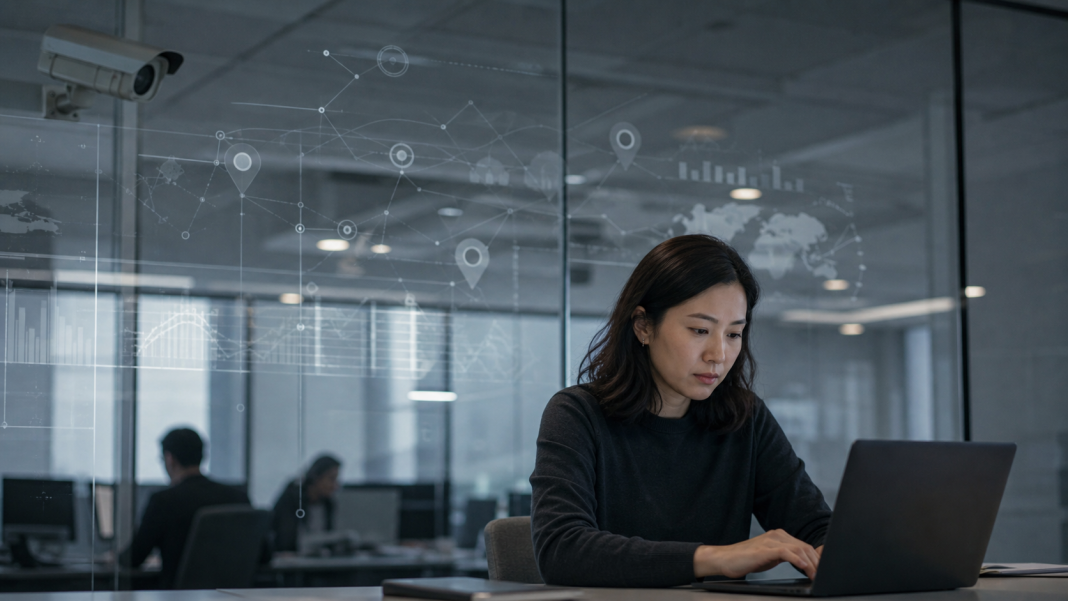
NEW YORK – Thousands of employers are using software, cameras, scanners and location tools to track how workers spend their time, raising new questions about privacy, fairness and how automated data is used in workplace decisions.
The monitoring expanded rapidly during the coronavirus pandemic as offices moved to remote work. Many systems remain in place and can record keystrokes, websites, messages, application use, location and task-completion rates. Some tools can activate cameras on employer-issued devices or assemble information into detailed worker profiles.
The Associated Press reported examples across industries: College administrators reviewed an adjunct professor’s comments on student essays, managers used appointment data to tell a pharmacist to spend less time with patients, and warehouse scanners measured whether employees inspected hundreds of items each hour.
Employers say monitoring can protect confidential information, document regulatory compliance, improve safety and help allocate staff. The same information, however, can be used to discipline workers or create productivity scores that do not capture the quality, difficulty or human value of a task.
Artificial intelligence and data science have made it easier to combine records and attempt to predict behavior. Wilneida Negron, director of research and policy at the worker-advocacy nonprofit Coworker, told the AP that employers can create extensive dossiers and use them to punish workers or make inferences about future conduct.
Legal protections vary by state and by the type of data collected. Federal law generally gives employers broad authority to monitor activity on company-owned systems, but wiretap, biometric, discrimination and labor laws may limit particular practices. Some jurisdictions require notice or consent before electronic monitoring.
Texas law does not provide a single comprehensive workplace-surveillance rule covering every technology. Employees in the Rio Grande Valley should read device and network policies, assume activity on company equipment may be logged and ask whether monitoring continues away from a worksite or outside scheduled hours.
Experts advise workers to keep personal email, banking and health activity off employer devices and networks when possible. They should not disable authorized security software. Instead, they can ask what information is collected, how long it is retained, who can see it and whether an automated score can be challenged.
Managers also face risks when they rely on incomplete data. A high appointment count may not reflect the time required for complicated patients, and keyboard activity may say little about planning, judgment or collaboration. Secretive or poorly explained monitoring can damage trust and may produce biased outcomes if algorithms are trained on flawed measures.
The growth of surveillance means workplace policy is increasingly a data-governance issue. Clear notice, limited collection, strong security and human review can help reduce harm while allowing employers to meet legitimate operational needs.
Source: The Associated Press, published Aug. 20, 2026.

