



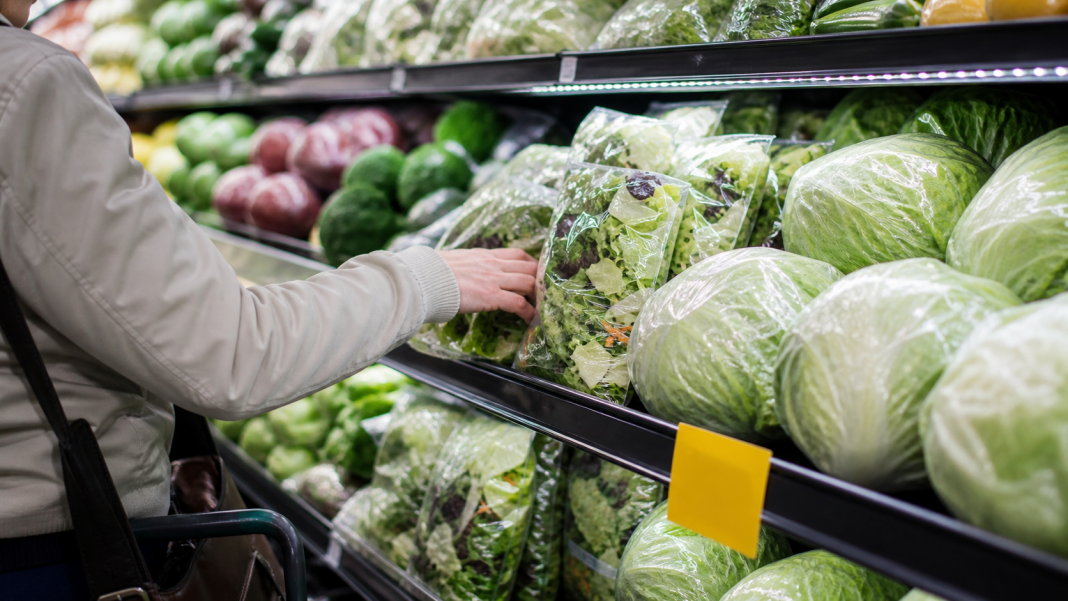
WASHINGTON – A record-setting Cyclospora outbreak linked to recalled iceberg lettuce has changed how millions of U.S. households shop for fresh greens, even as federal officials say the products covered by the recall are no longer on store shelves.
Research firm Numerator estimated that more than 26 million households stopped buying salads and fresh greens during the four-week period ending July 26. More than 6.5 million households stopped buying salad mixes and kits, according to the firm’s analysis of purchasing data from 200,000 households across more than 44,000 retailers.
USA Today reported Aug. 19 that one in 10 households reduced spending on lettuce, salad and greens. In states with more than 200 cases tied to the outbreak, average household spending in the category fell 10.7%. Visits to quick-service restaurants for salads declined by more than 16%, while household spending at fast-food chains fell 2.1%.
The outbreak is caused by Cyclospora cayetanensis, a microscopic parasite spread through contaminated food or water. Infection can cause prolonged watery diarrhea, stomach cramps, nausea, fatigue, loss of appetite and weight loss. Symptoms can improve and then return, and treatment generally requires a specific prescription antibiotic rather than common anti-diarrheal remedies alone.
The Food and Drug Administration and Centers for Disease Control and Prevention linked a major cluster to processed iceberg lettuce from Taylor Farms de Mexico. Taylor Farms recalled affected products in July, Walmart recalled certain Marketside iceberg salad products, and Taco Bell removed lettuce from the supplier. Taylor Farms said its branded salads and kits were not associated with the outbreak.
In an Aug. 13 update, the FDA reported 9,481 illnesses, 398 hospitalizations and two deaths in the outbreak specifically linked to the recalled lettuce. Cases had been identified in 17 states, and products had been distributed broadly, including in Texas. Federal officials said most illnesses began before the July 17 recall and that all recalled lettuce connected with the investigation should be out of the marketplace.
The CDC has also counted additional domestically acquired cyclosporiasis cases that may belong to other clusters or have no identified source. That distinction matters because national surveillance totals are higher than the number formally connected to the Taylor Farms de Mexico outbreak.
Food-safety specialists say consumers do not need to avoid all lettuce. People who still have a recalled product should discard it and clean surfaces it touched. Anyone with persistent diarrhea or other symptoms after eating lettuce should contact a health professional, particularly older adults, young children and people with weakened immune systems.
Numerator found that 82% of households that stopped purchasing salad kits intended to return once the outbreak is contained, suggesting the sales decline may be temporary. For now, the episode shows how a focused recall can affect an entire produce category when shoppers lack clear information about which products are involved.
Source: USA Today, published Aug. 19, 2026. Additional verification: U.S. Food and Drug Administration outbreak updates.

